

Peptide Capsules
10 Compounds
Peptide Capsules
Refine by
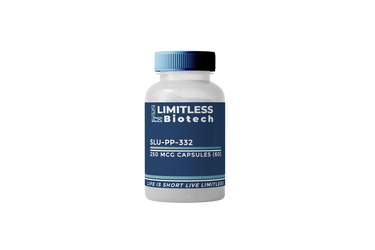


Peptide capsule products
BPC-157 and GHK-Cu are peptide-based materials. The selection also includes non-peptide research compounds such as 5-Amino-1MQ and SLU-PP-332. Capsule presentation describes the format, not the compound's scientific classification.
Compare the compound name and chemical form first, then review the labeled amount, capsule count, listed excipients, and storage information. The BPC-157 listing specifies 250 mcg per capsule, while the 5-Amino-1MQ listing specifies 50 mg. These are different materials and package specifications, not equivalent quantities.
5-Amino-1MQ Capsules
5-Amino-1MQ Capsules contain 5-amino-1-methylquinolinium, a small molecule studied as an inhibitor of nicotinamide N-methyltransferase, or NNMT. It is not a peptide. Review the individual product's chemical identity and capsule specifications.
SLU-PP-332 Capsules
SLU-PP-332 is a non-peptide small molecule studied as an agonist of estrogen-related receptors (ERRs). Review the capsule product's labeled amount, container count, and applicable material documentation.
BPC-157 Capsules
BPC-157 Capsules contain a 15-amino-acid research peptide in the arginate presentation identified by the product record. The listing specifies 60 capsules with 250 mcg per capsule. Review the product-specific information for the material and its applicable documentation.
GHK-Cu Capsules
GHK-Cu Capsules contain a copper-binding tripeptide complex based on glycine, histidine, and lysine. The listing specifies 60 capsules with 2 mg of GHK-Cu per capsule. Compare the labeled compound amount with the separately listed excipient information.
Documentation
Certificates of Analysis (COAs) report analytical findings for the tested material. For capsule products, the applicable report may follow the underlying compound and material grade rather than a separately tested finished capsule. Match the compound identity, grade, and batch to the product record.
High-Performance Liquid Chromatography (HPLC) assesses chromatographic purity, while Liquid Chromatography-Mass Spectrometry (LC-MS) provides evidence relevant to identity. Purity is not the percentage of the entire capsule's physical weight that consists of the target compound, and a purity report does not establish the quantity in each capsule. Where quantitative testing is included, review what was measured and whether the result applies to the underlying material or the finished format.
Review the tests and specifications documented for the selected material. Capsule format alone does not establish sterility testing, endotoxin testing, or manufacturing origin.
Browse our research peptides for other material presentations, or explore the capsule products and their individual specifications.
Frequently asked questions
What are peptide capsules in a research catalog?
Capsules are a supplied format for laboratory research materials. The product record identifies the compound, labeled amount, capsule count, and any listed excipients. Capsule format does not establish improved stability or quantitative testing of every finished capsule.
Are all compounds listed in this category peptides?
No. BPC-157 and GHK-Cu are peptide-based materials, while 5-Amino-1MQ and SLU-PP-332 are non-peptide small molecules. Their presence in a capsule selection does not change their classification.
Which specifications should be compared?
Compare the full compound identity, labeled amount per capsule, capsule count, excipient information, material grade, storage conditions, and applicable COA. Distinguish product-label quantities from analytical measurements and verify which tests were performed.
Does each capsule product require a separate finished-format COA?
Not necessarily. The applicable COA may follow the underlying tested compound and material grade used for a capsule product. It must correspond to that material and batch. A shared report does not automatically establish finished-capsule quantity or tests beyond its documented scope.